Every expense-splitting app has the same cold-start problem: it only seems useful once everyone you split with is on it. So you download one, invite four friends, two of them install it, one creates an account but never opens it again, and your uncle — who owes you for half a hotel room — would sooner mail you a cheque than scan a QR code. At which point most people give up and go back to a notes file, which tracks everyone equally badly but at least tracks everyone.
This is the wrong conclusion to draw. The problem isn't that some people won't install an app; it's that most splitting apps are built as networks, where a person only exists once they've signed up. A ledger doesn't need to work that way. Your record of "Anna owes me $40 for the concert tickets" is true whether or not Anna has an account anywhere — and an app that refuses to store it until she registers is putting its growth ahead of your bookkeeping.
Your ledger shouldn't depend on other people's phones
Think about how a paper ledger works. You write down what happened: who paid, who owes. The other person's participation is optional — the record is yours. That's the standard an app should meet: you should be able to track money between you and anyone, and the other person joining should be an upgrade, not a prerequisite.
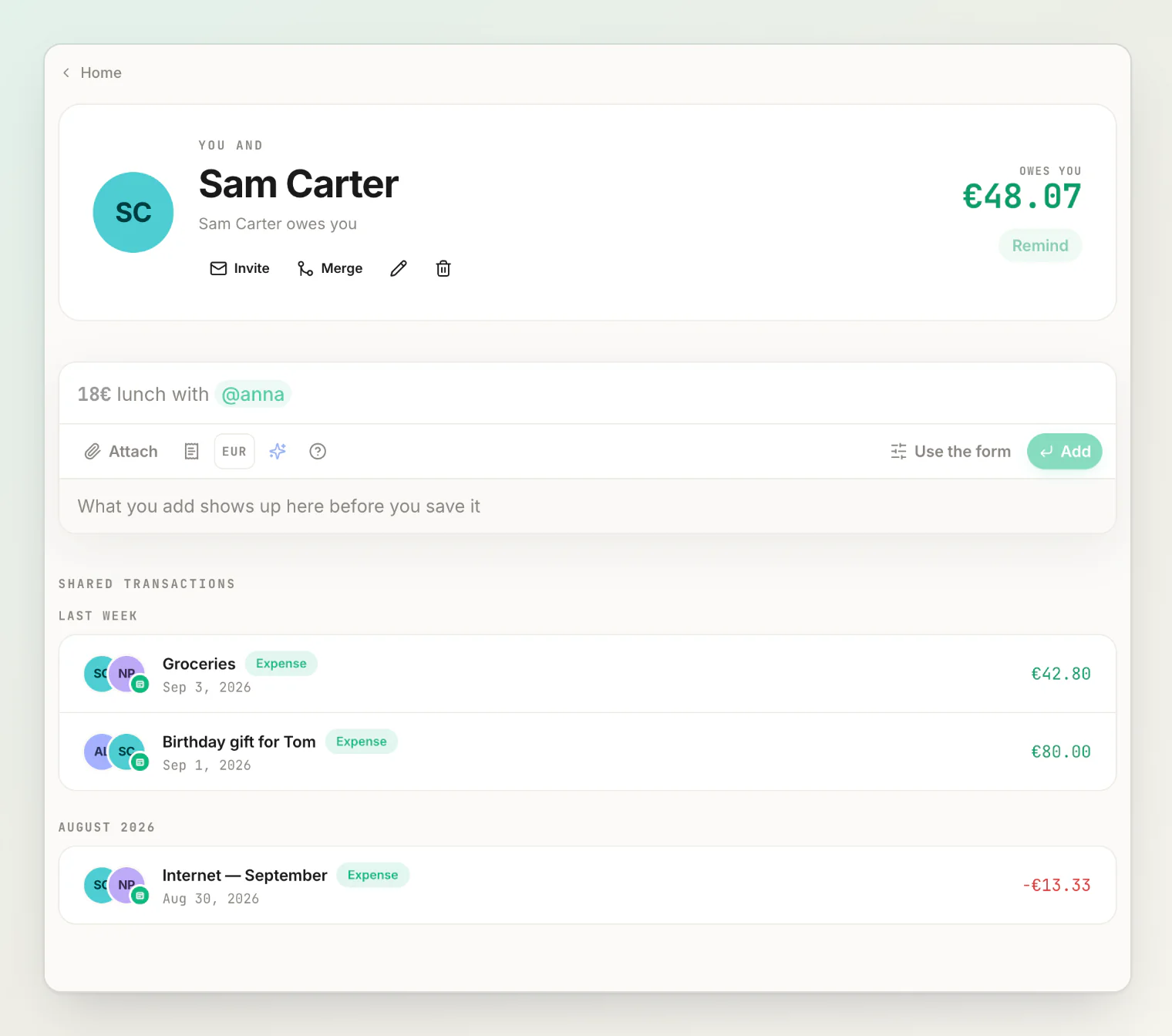
In HiBill this is what placeholders are for. A placeholder is a person you create yourself — a name, and optionally an email — for someone who hasn't joined HiBill yet. Once created, they behave like anyone else in your ledger: you can add them to expenses, split with them evenly or by exact amounts or percentages, record transfers when they pay you back, and watch a running balance accumulate on their timeline. From your side, there is no difference between splitting with a registered friend and splitting with a placeholder.
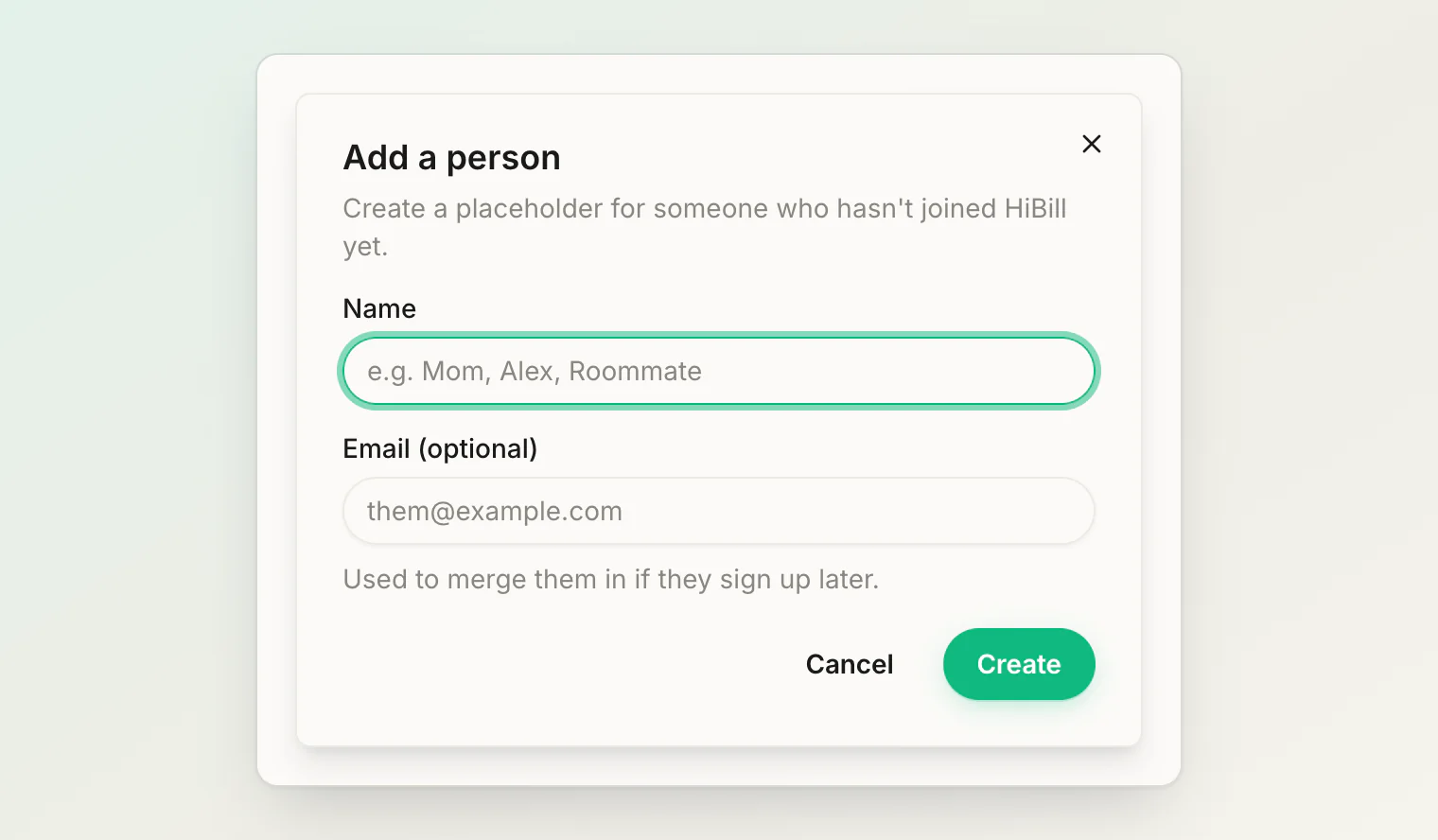
The person behind the placeholder doesn't see any of this, because there's nothing for them to see — no account, no notifications, no pending invitation nagging them. It's your record, kept for you. Which is honest about what's actually happening: until they join, you were always the only one keeping track.
Setting it up so future-you is covered
A few habits make placeholders work better over the long run:
Add the email if you know it
The email on a placeholder is used to merge them in if they sign up later. Nothing is sent to it unless you ask — by ticking Also send them an invite to join HiBill when you add them, or pressing Invite on their page. If your friend eventually creates a HiBill account with that address, your placeholder is linked to their new account automatically, with all its history. You can edit a placeholder's name or email at any time, so it's fine to add it later too.
One placeholder per person, not per debt
Resist the urge to create "Anna (trip)" and "Anna (rent)". The value of a per-person ledger is that everything between you and Anna nets into a single balance, so a $30 debt in one direction and a $25 debt in the other don't turn into two awkward conversations. Keep one Anna, and let her timeline hold the whole story. How to split expenses with friends explains why one running balance beats a list of debts.
Don't worry about running out
Placeholders aren't an artificially scarce resource meant to push you toward invites. HiBill's free tier allows up to 2,000 of them — more people than you will split a bill with in a lifetime.
What happens when they finally join
Sooner or later, some of these people do sign up — usually because enough of their friends kept saying "I'll add it to HiBill". This is where most systems break: your months of history live on a made-up contact, and their brand-new account starts from zero.
If they signed up with the email you saved on the placeholder, the two are already linked. Otherwise HiBill handles this with a merge request. You ask to merge your placeholder into their real account, and they approve it — a merge request is never something done to someone, because it attaches shared history to their account and they should get a say. When they approve, the placeholder links to their account, your shared expenses combine, and the balance you've been tracking becomes a balance you both see. The history you kept alone becomes history you share, without re-entering anything.
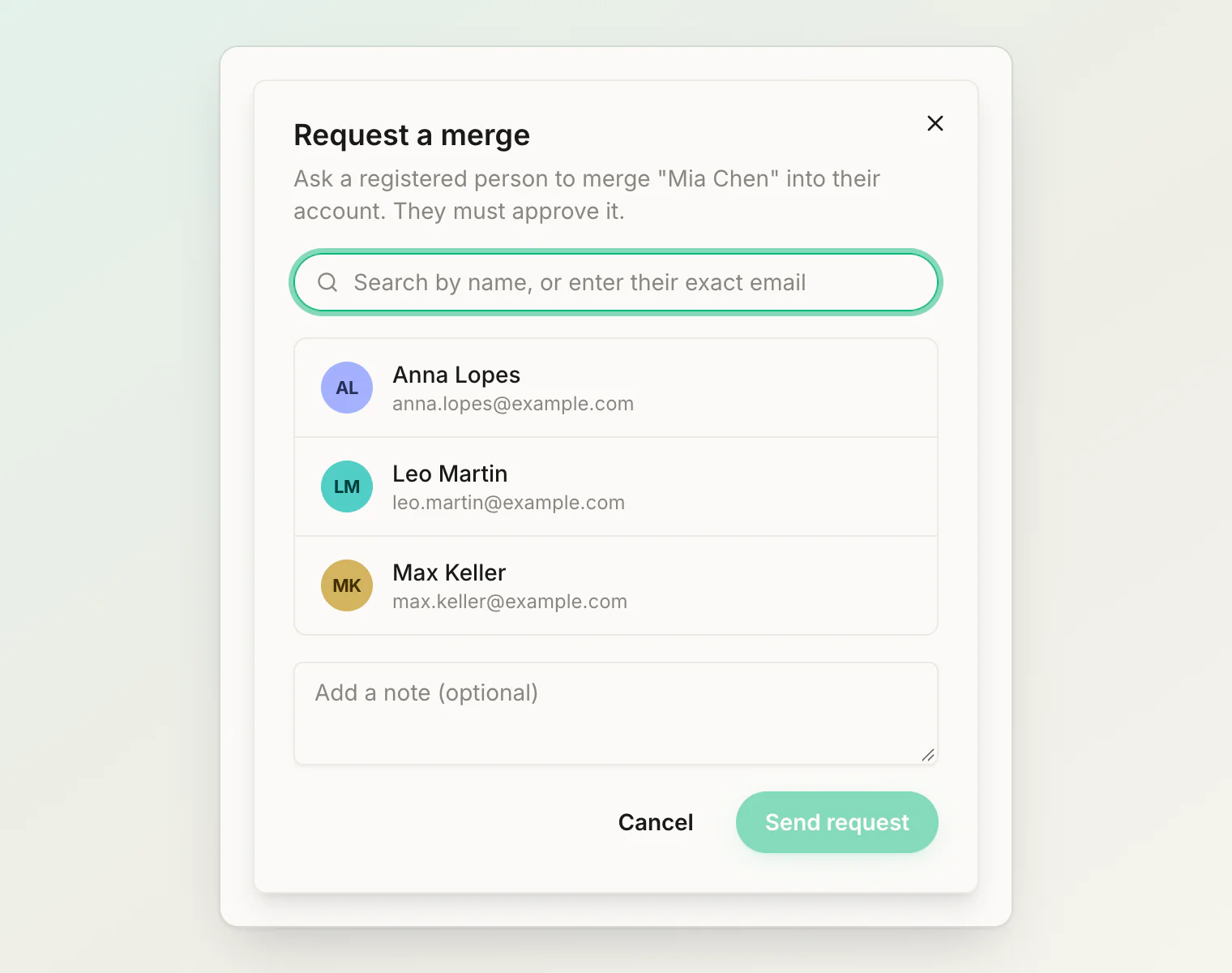
If they decline, nothing is lost either: the placeholder stays as a separate person that only you track, exactly as before. And if you ever remove a placeholder you no longer need, the transactions they were part of stay in your ledger — the person just stops appearing when you pick participants for new expenses.
The etiquette of tracking someone who doesn't know
A fair question: is it strange to keep a running balance on someone who has no idea an app is involved?
It's less strange than the alternative. You were going to remember the debt anyway — in your head, badly, with growing resentment as the number blurred. A written record is kinder than a mental one, because it replaces "I feel like you owe me a lot" with "it's $63, here's what it's from". When you do bring it up, you're not presenting a surveillance dossier; you're answering the question "wait, how much do I owe you?" with an actual answer, itemized, instead of a shrug.
The one real rule: the record is for accuracy, not ammunition. Track so you can settle up and forget about it — not so you can win an argument three months from now.
Split with the people you actually know
The test of an expense tracker isn't how well it works in the ideal case where your whole friend group adopts it in a weekend. It's whether it works with the group you actually have: two enthusiasts, three "sure, later" people, and one holdout who pays for everything in cash. With placeholders, all six of them fit in your ledger today — and the merge request is waiting for whenever any of them changes their mind.
Continue reading
Adding people who haven't signed up — the steps for creating a placeholder and inviting them later.
5 Ways to Keep Track of Who Owes You Money (and Which One Holds Up) — how a ledger compares with a notes file, a spreadsheet and memory.
Looking for a Splitwise Alternative? What Actually Matters in an Expense-Splitting App — what to check before you pick an app for the people you split with.