This is the first build of HiBill that anyone can sign up for. It is also the first one we would describe as finished enough to be honest about — the model underneath stopped moving, and everything below is built on it.
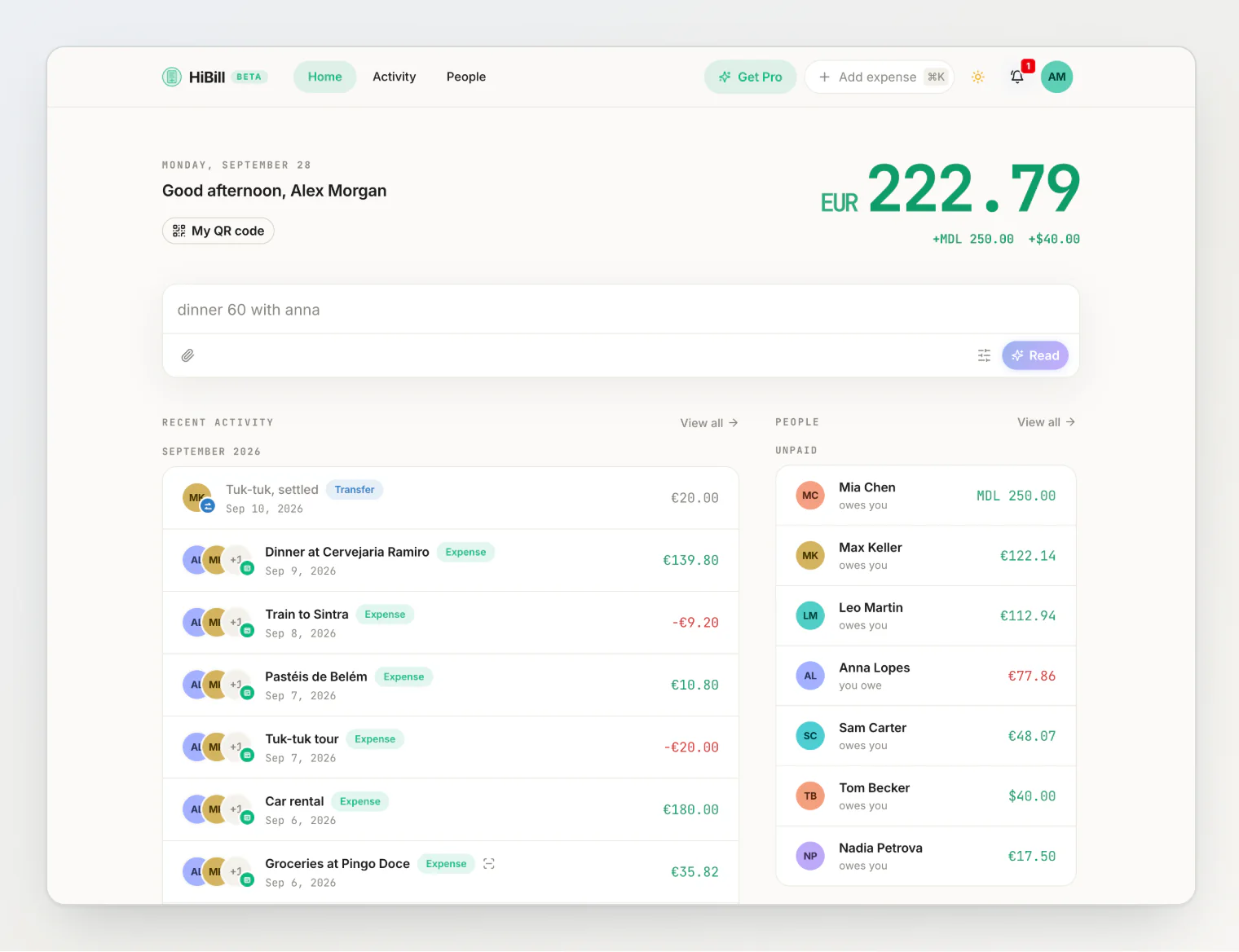
The transaction model
Everything that happens in HiBill is a transaction. There are two kinds you create:
Expense — somebody paid for something that other people share.
Transfer — money moved from one person to one person. Lending, settling up, paying someone back. All the same shape.
Earlier drafts of HiBill had separate objects for expenses, loans, paybacks and settlements. They collapsed into these two. A settlement is not a special ceremony any more; it is just a transfer that happens to bring a balance to zero, and it sits in the same timeline as everything else.
There is a third kind, Simplification, written when you run Simplify debts and a debt loop collapses. You never author one by hand.
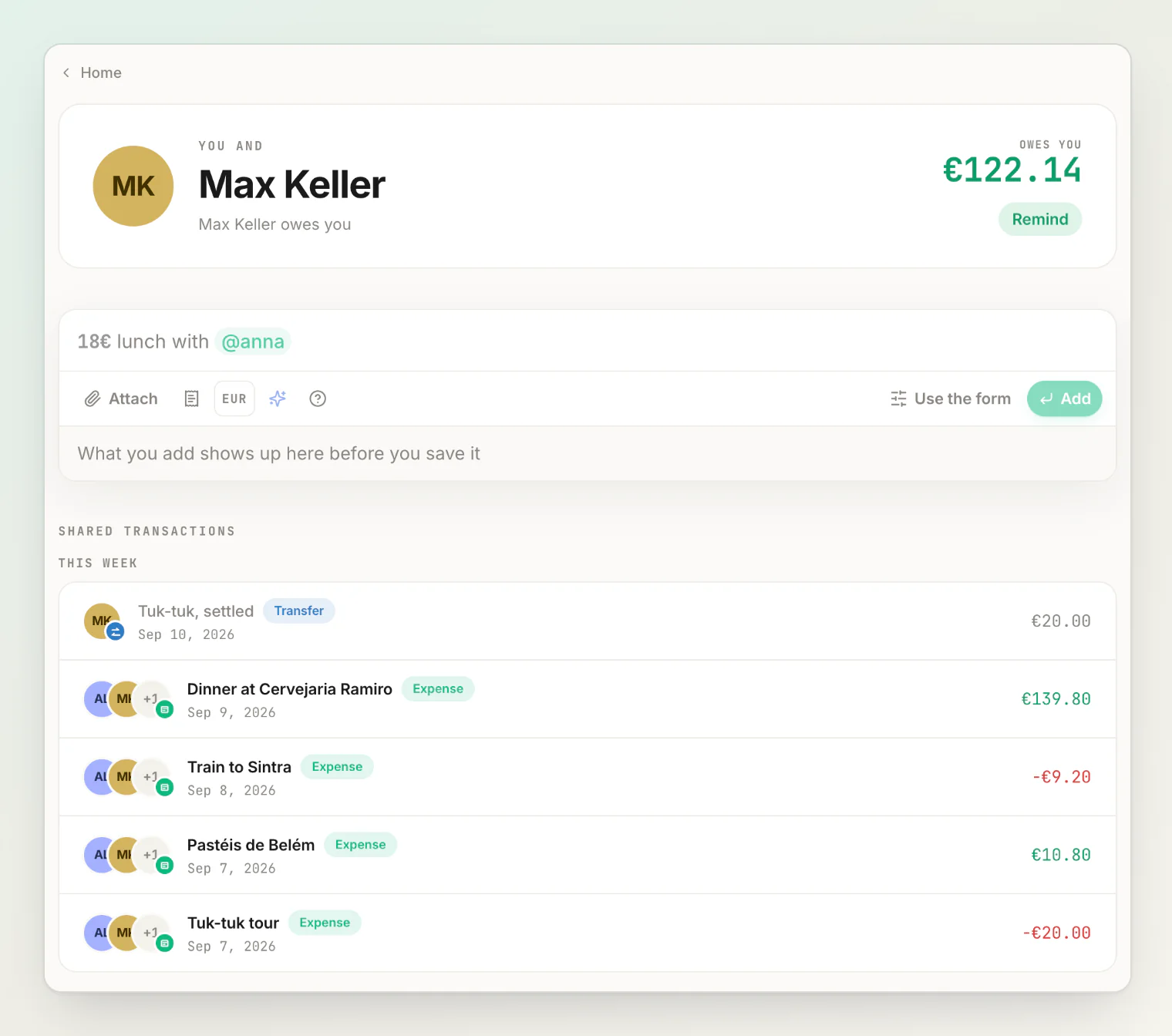
Balances live between people
There is no group pot. A balance in HiBill is always between you and one other person, in one currency. Open a person and you see the whole two-person ledger — every expense, every transfer, and what it adds up to right now.
Groups
Groups are how you connect a lot of people quickly. Name one — "Lisbon weekend", "Flat 4B" — open the QR, and everyone who scans it is connected to everyone else in one tap. Join links live for 24 hours.
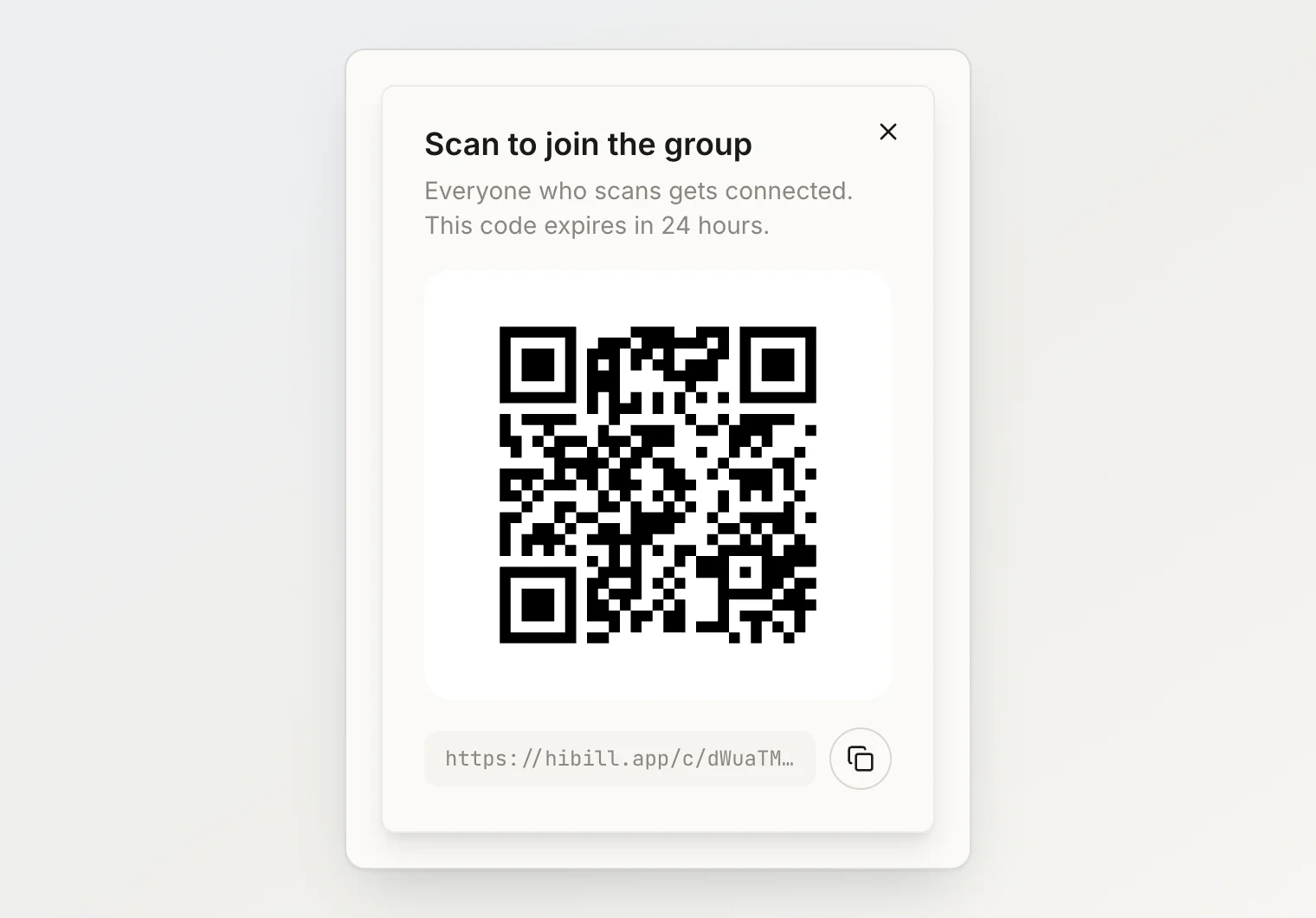
A group holds no balance of its own. It is a roster, not an account. Its job is to save you from adding seven people one at a time, and then to let you drop all of them onto a transaction at once.
For connecting with one person rather than a group, every account also has a personal QR code that stays valid until you reset it.
Receipt scanning
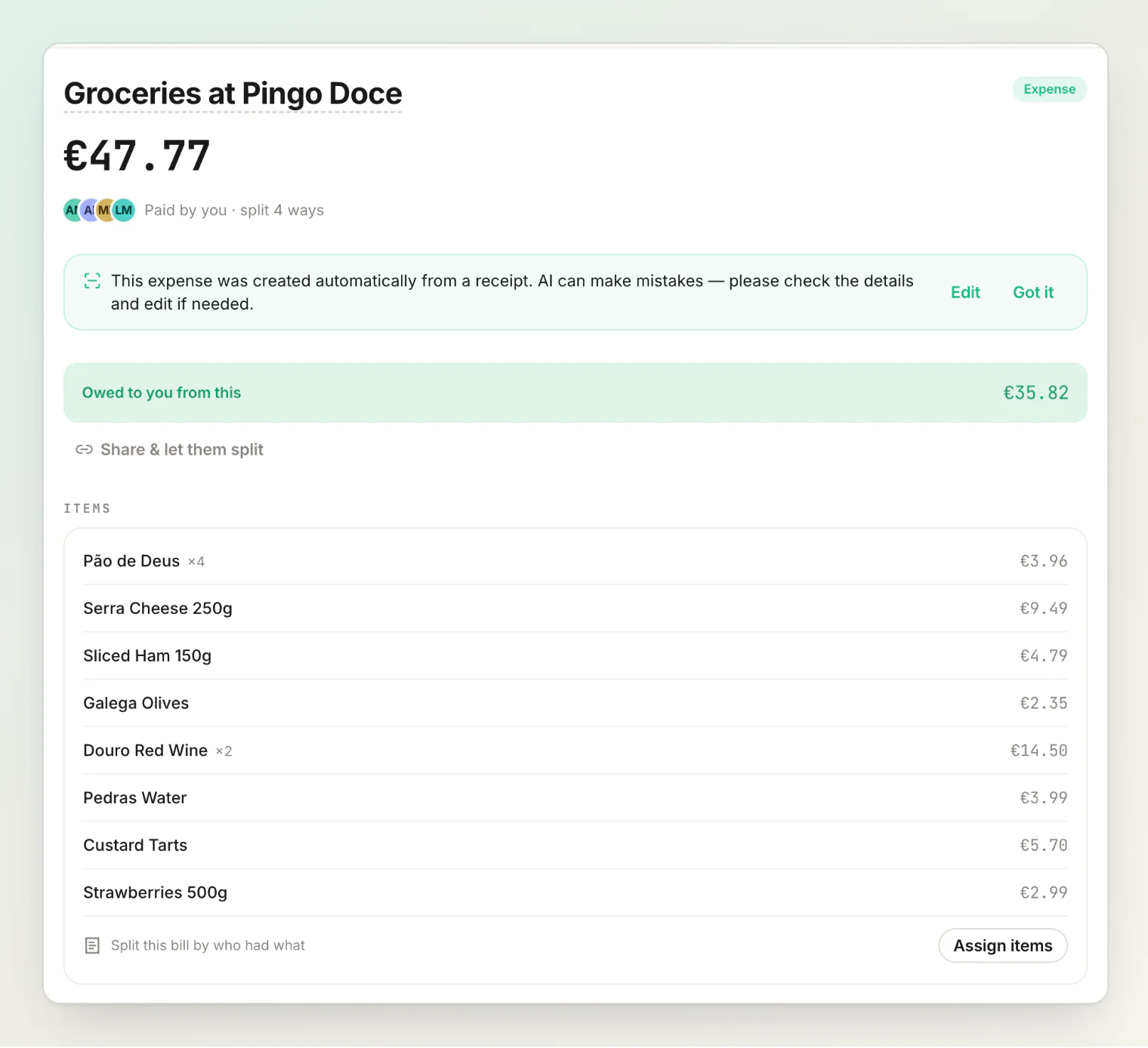
Photograph a receipt and HiBill reads the title, total, currency, date and line items off it, then drafts the transaction for you to confirm or change. Free accounts get 5 scans a month; Pro gets 100.
Splitting
Pick how an expense divides:
Equally — the default, and what most bills want.
By amount and by percentage — when the split is uneven.
By items — assign individual line items from a scanned receipt to individual people.
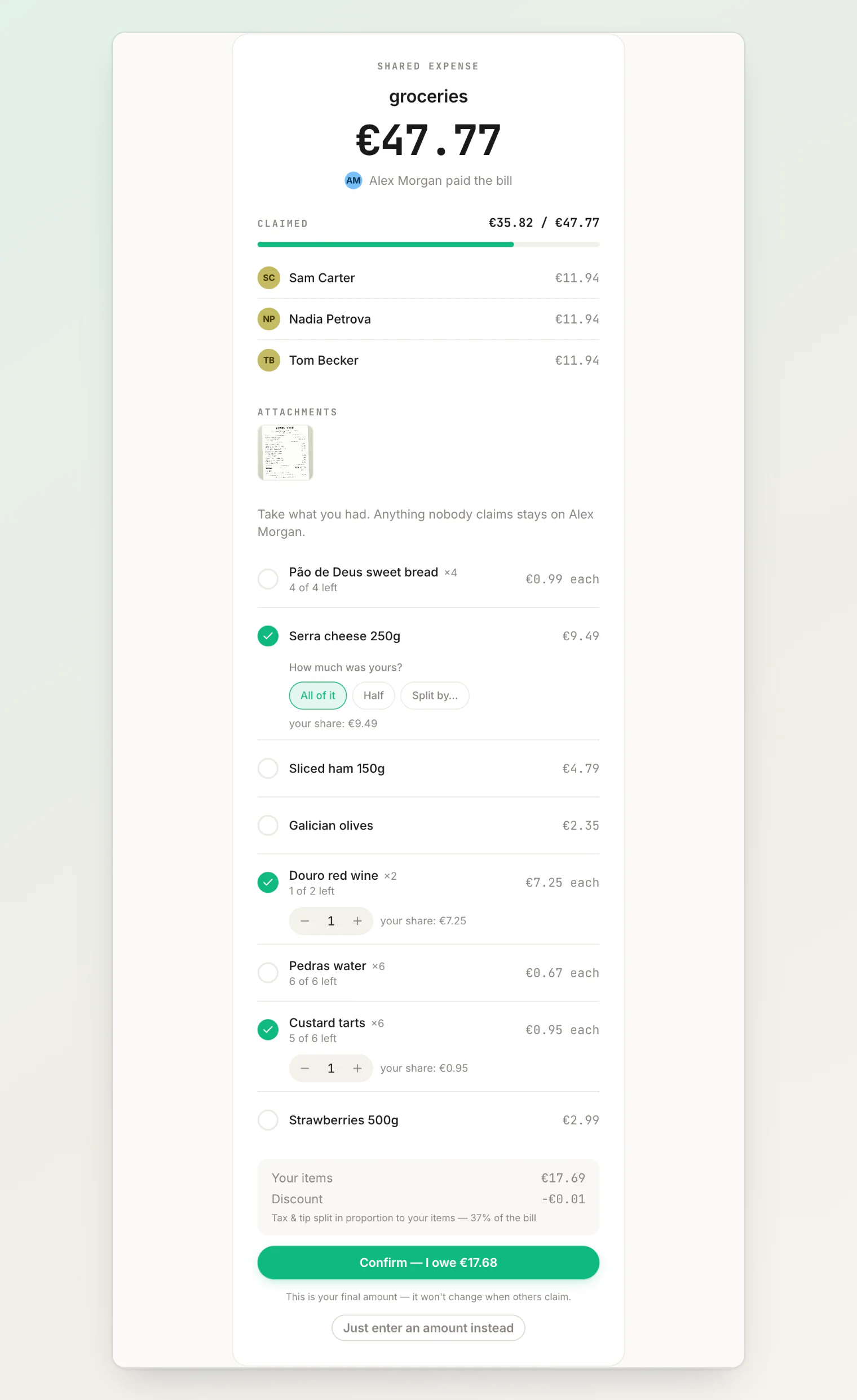
Then there is open splitting, which you get by sharing a bill rather than picking it from the menu. Send the link and people claim their own share — an equal share, a specific amount, or the items they had. Whatever nobody claims stays with whoever paid, so a shared bill is never stuck waiting on a straggler.
Also in this build
38 currencies, with balances kept separately per currency rather than converted behind your back.
Placeholder people — add someone who has not signed up, split with them straight away, and merge the records if they join later.
Attachments and comments on any transaction.
Public share links, valid for 30 days by default, for people outside your account entirely.
Notifications in-app and by mobile push.
Sign in with email, Google, Apple or Telegram — or try the whole app as a guest and keep your data when you register.
14 built-in categories, plus your own.
What "beta" means here
The data model is settled and we are not planning another rewrite of it. What is still moving is the surface: some screens are thinner than we want, the mobile app trails the web, and there are corners of the settings that are more functional than pleasant.
We would rather ship this and hear where it hurts. If something is wrong, tell us — the feedback board is read by the people who write the code.