Living with roommates means sharing money whether you planned to or not. Rent, electricity, the internet bill, a couch someone fronted for, groceries that quietly become communal. None of it is complicated on its own. What goes wrong is the accumulation: dozens of small amounts, half-remembered, spread across three people's mental math.
The fix is not a spreadsheet and not a group chat full of screenshots. It is a simple agreement about how you split, plus one place where everything gets written down.
Agree on the split before the first bill arrives
Most roommate money fights are really fights about assumptions. Settle these questions once, out loud, before they cost anything:
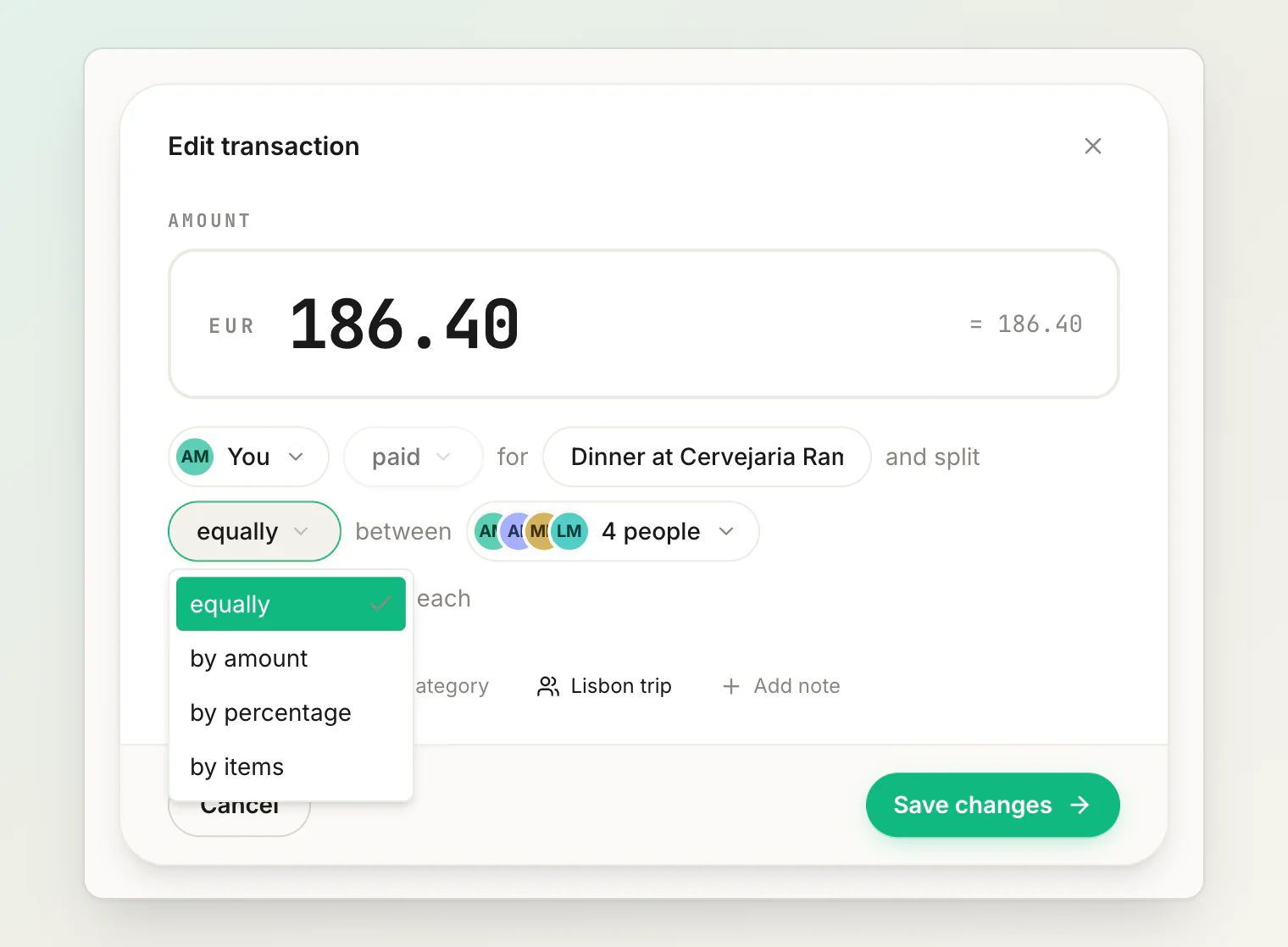
Rent. Equal shares are the default, but they only feel fair when the rooms are roughly equal. If one room has an ensuite or a balcony and another fits a bed and nothing else, weight the split — for example 40/32/28 instead of a third each. A percentage split you all agreed to beats an "equal" split someone silently resents.
Utilities. Electricity, water, gas, and internet are genuinely shared — split them evenly. It is not worth metering who showers longer.
Groceries and household supplies. Decide which category each item falls into: strictly personal (your oat milk), strictly shared (dish soap, toilet paper, olive oil), or split by usage. Keep the shared list short and obvious. Everything else, people buy for themselves.
One-off purchases. A vacuum, a kettle, furniture. Agree in advance that anything over some threshold — say $50 — gets discussed before it becomes a shared expense. This prevents the "I bought us a $300 air purifier, you each owe me $100" surprise.
Write everything down in one place
The system fails the moment expenses live in three different heads. Whoever pays a bill records it immediately — that is the entire discipline. Where you record it matters less than that you always do, but some tools make it far easier than others.
A notes app or spreadsheet works until it doesn't: nobody updates it, the formulas break, and reconstructing March from bank statements is miserable. A group chat is worse — amounts scroll away, and "who owes what" becomes an archaeology project.
A dedicated tracker keeps a running balance per person. In HiBill, for example, each expense is one entry: who paid, who participates, and how it splits — evenly, by percentage, or by exact amounts. The balance between you and each roommate updates automatically, and both of you see the same number. If your household has a paper-receipt habit, you can photograph the receipt and let the app pull out the total, date, and line items instead of typing them in.
One useful pattern: if a roommate hasn't joined whatever tool you use yet, don't wait for them. Add them as a placeholder, keep recording, and link the history to their account when they sign up. The record matters more than everyone's onboarding schedule.
Keep balances per person, not in a house pot
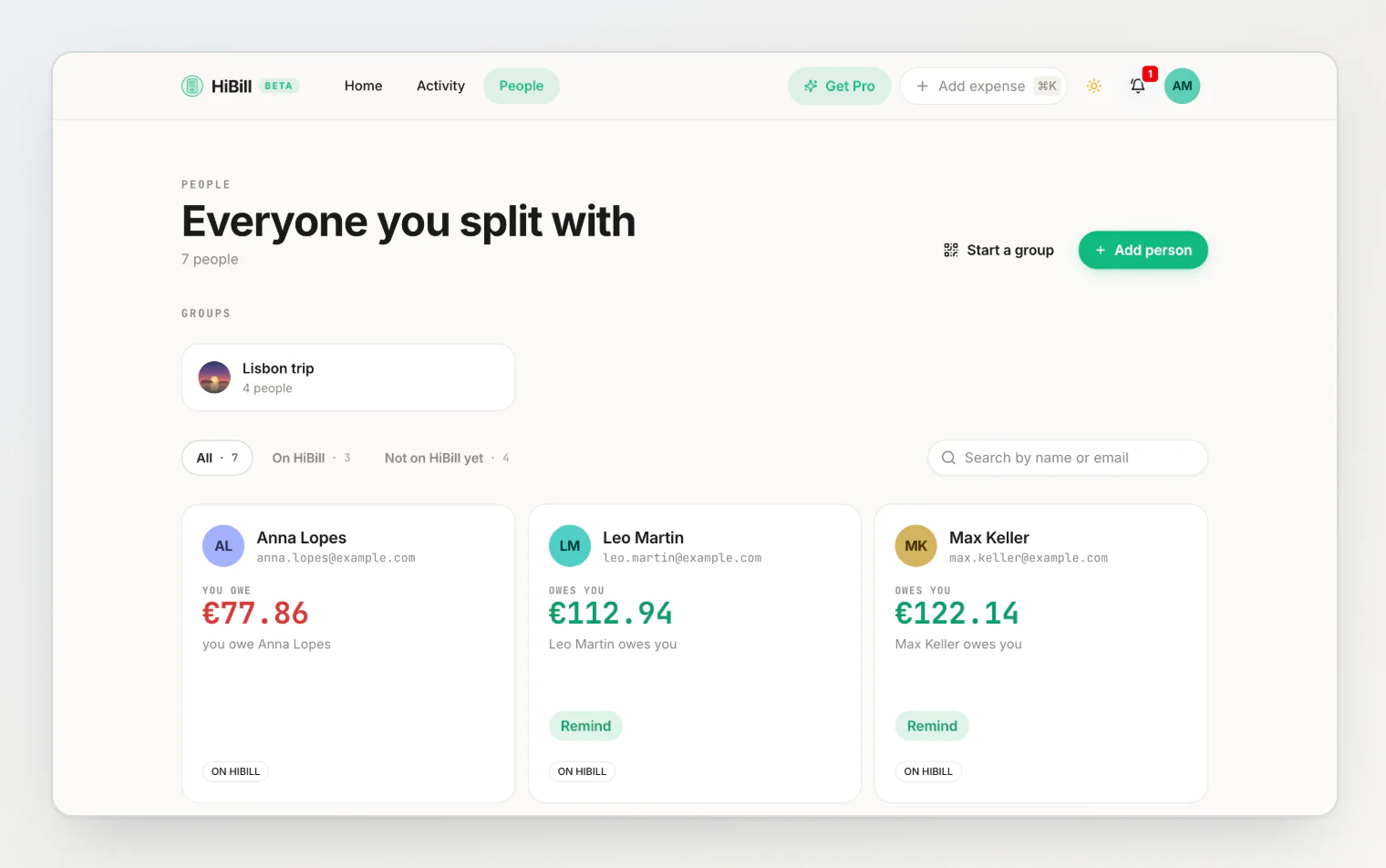
It is tempting to think of roommate money as one big pool — "the flat owes the flat". Resist it. Pools obscure the actual question, which is always pairwise: does Alex owe you, or do you owe Alex?
Per-person balances have two advantages. First, they survive change. When a roommate moves out, you settle one number with one person and you are done — no untangling a communal fund. Second, they stay honest. A pot balance of "the house owes $140" tells nobody what to actually do; "you owe Jordan $47" does.
This is why some trackers, HiBill included, deliberately keep balances per person even when a whole household is connected. Getting everyone linked up can still be a one-step affair — one shared QR code or link at move-in and the roster is done — but the money itself always resolves between two people.
Settle up on a schedule, not on a vibe
Pick a cadence and make it boring: the first of the month, right after rent, is natural. Everyone looks at their balances, the people who owe send a transfer, and everyone starts the month near zero.
Two rules make settling painless:
Settle the balance, not the individual expenses. You don't pay someone back for the groceries, then the electricity, then the pizza. You pay one number that nets everything out.
Log the payment the moment it happens. A repayment that isn't recorded will be forgotten by one of you and remembered by the other — the worst possible combination. In a tracker, that's a transfer entry: no split, no receipt, the balance just moves.
Small balances don't need to hit zero. If you're within a few dollars of even, call it square. The goal is that nobody is ever owed enough to feel it.
Handle the awkward cases explicitly
A roommate who always pays late. The schedule helps here — a fixed settle-up day makes the ask automatic rather than personal. A written balance helps more: "the app says $63" is a fact, not an accusation.
Unequal use of shared things. If someone's partner effectively lives with you three nights a week, utilities stop being equal. Renegotiate the percentages; don't passive-aggressively track shower minutes.
Someone moving out mid-month. Prorate rent and utilities by days, settle the final balance in full before the deposit conversation, and archive the arrangement. A clean written history makes this a ten-minute conversation instead of a dispute.
The one-paragraph version
Agree on the split rules once. Record every shared expense the moment it's paid, in one shared place with per-person balances. Settle monthly by paying one net number, and log the repayment. Whether you run this on paper or in an app like HiBill, the system is the same — the tool just decides how much of it happens automatically.
Money between roommates should be the least interesting thing about living together. A little structure up front keeps it that way.
Continue reading
Splitting rent and bills with roommates: a system that survives the year — dividing rent, utilities and the shared basket for a whole year, not just the first month.
How to ask a friend to pay you back — what to say to the roommate who always pays late, and when to escalate.
Choosing a split method — set up equal, percentage or exact-amount splits in HiBill.