Group trips run on fronted money. One person books the apartment, another rents the car, a third keeps paying for dinners because their card works everywhere. By day three, nobody knows who is up and who is down — and by the flight home, the group chat contains forty photos of receipts that no one will ever reconcile.
You cannot avoid the fronting. You can avoid the archaeology. Here is a system that takes five minutes to set up and almost no attention during the trip.
Before the trip: connect everyone once
The biggest tracking failure happens before anything is spent: expenses go unrecorded because adding people to each one is annoying. Fix that in one step.
If you're using an app, get the whole group connected before departure. In HiBill this is a group: create one — "Lisbon weekend", say — and share a single QR code or link. Everyone who scans it is connected to everyone else in one tap, and from then on you can add the whole roster to an expense at once. The group itself holds no money — it is the guest list, and the place the trip's expenses gather once you tag them, so you can read the whole trip in one list instead of hunting through a year. Balances stay between individual people, which matters later.
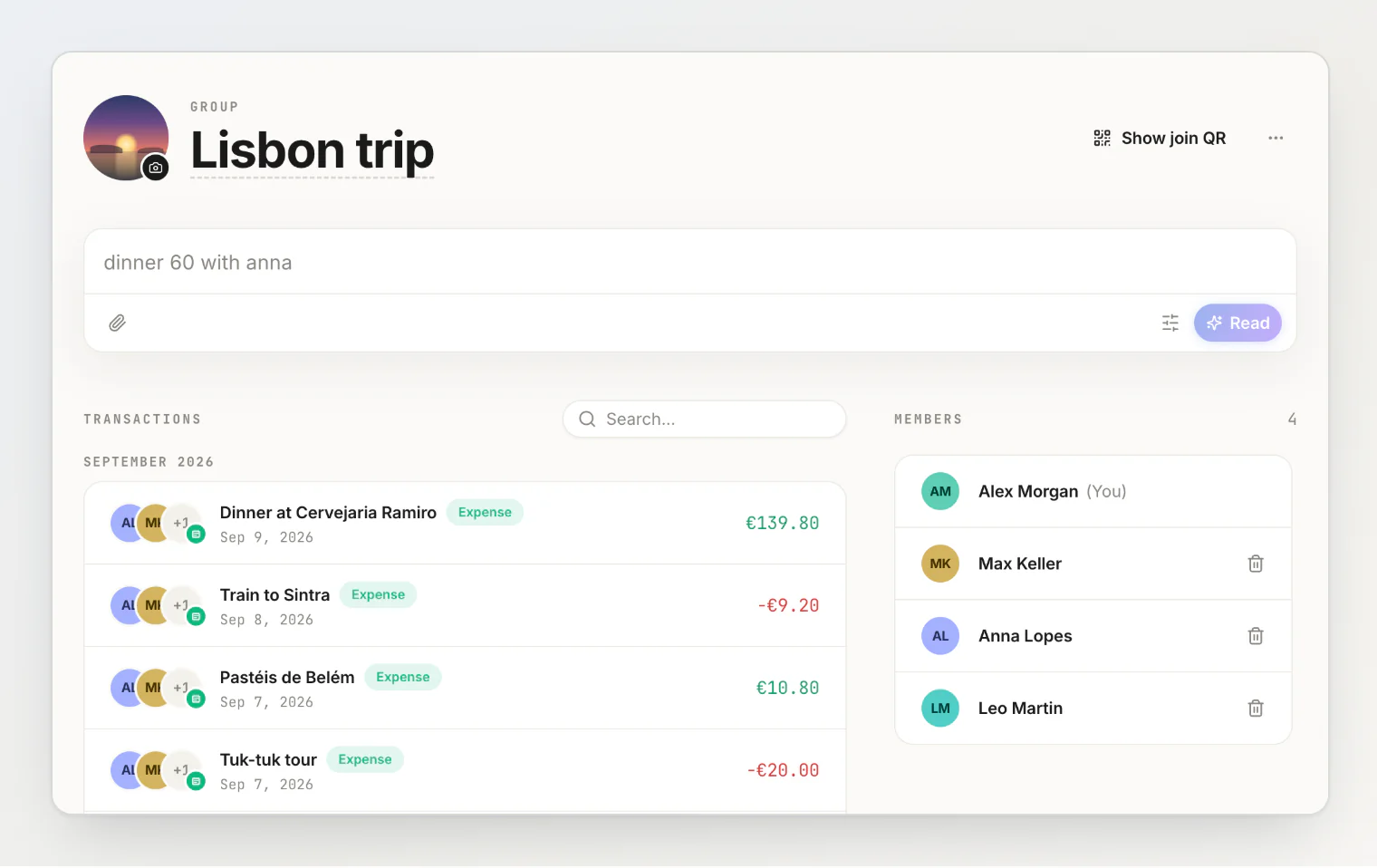
If someone refuses to install anything, add them as a placeholder and track on their behalf. They can claim their history if they ever join; either way, the record exists.
Also agree on two things out loud:
What counts as shared. Accommodation, transport, group meals: yes. Someone's souvenir run: no. The gray zone — snacks, coffees someone grabs for three of five people — is where trust erodes, so pick a rule ("anything consumed by more than half of us is shared") and stop thinking about it.
Who is the default payer for big items. It's fine for one person to front the apartment. It's only a problem if it's invisible.
During the trip: record at the moment of payment
The entire discipline is one habit: whoever pays, records it before putting the card away. Ten seconds, at the table. Not tonight, not "when we're back at the hotel" — memory is the thing this system exists to replace.
What makes the ten seconds real:
Don't itemize unless it matters. Most group expenses split evenly and should be entered that way. Reserve careful splitting for the cases where even is genuinely unfair — one person skipped the boat tour, two people shared a room the others didn't.
Use uneven splits when they're warranted. A decent tracker gives you options beyond equal shares: split by exact amounts, by percentage, or by items. If the dinner had one person drinking water while four shared two bottles of wine, split by items and be done with it — no debate required.
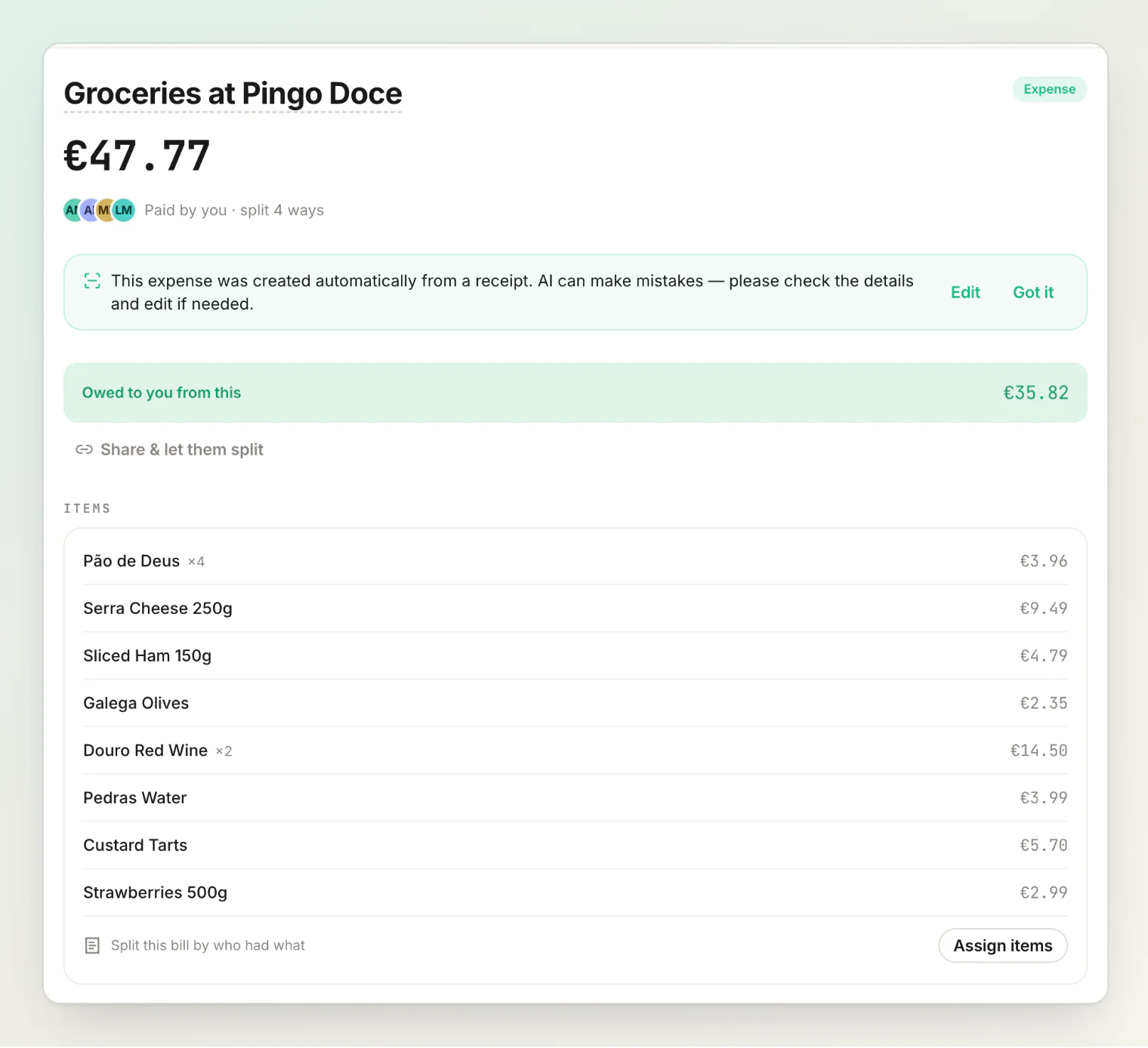
Photograph long receipts instead of typing them. A big supermarket run or a restaurant bill with fifteen lines is exactly where manual entry fails. HiBill can read a photo of the receipt — total, date, currency, and the individual line items — and show it in a review you confirm with Add, so the barrier to recording the messiest bills is a single photo. There's even a lazier option: share the expense by link and let each person claim the items they had, tax and tip allocated proportionally.
Record repayments too. If someone hands the driver cash for gas mid-trip, that's a transfer — log it. Unlogged cash repayments are the leading cause of "wait, I paid you back for that" disputes.
Multiple currencies: don't convert, just record
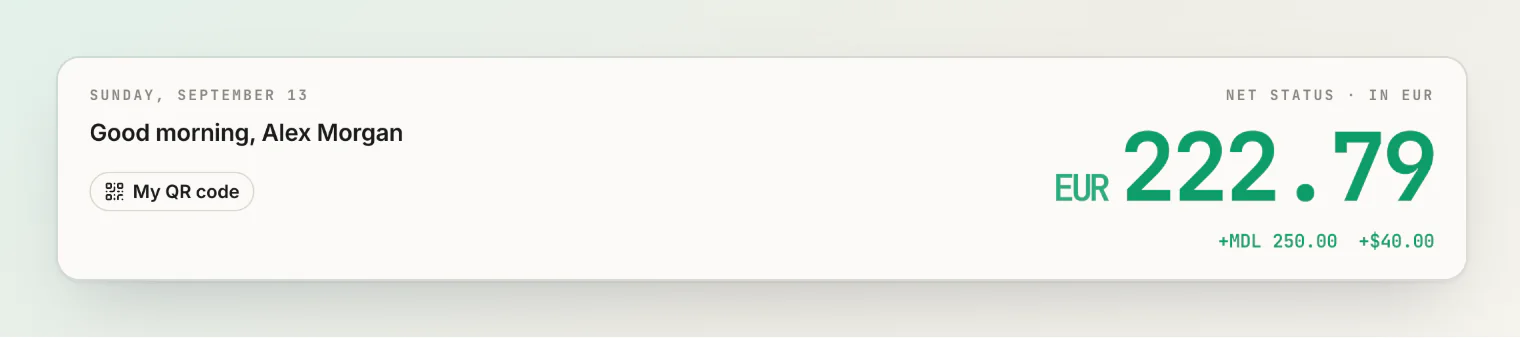
If the trip crosses borders, record each expense in the currency you actually paid. Converting everything to home currency by hand introduces errors and arguments about which rate to use. A tracker that keeps per-currency balances sidesteps the problem: you might end the trip owing Sam €40 and being owed £15 by the same person, and both numbers are simply true. Settle each currency, or agree on a conversion at the end when you can see the whole picture. HiBill supports several dozen currencies and detects the currency from a scanned receipt, which removes one more chance for silent errors.
After the trip: settle once, per person
Resist the urge to settle mid-trip. Balances swing constantly while everyone is fronting different things; interim payments just add entries. Let it ride, then settle once at the end.
The end-of-trip process:
Sweep for stragglers. Give everyone a day to add anything they forgot — the tolls, the parking app, the last-morning coffees.
Look at net balances per person, not the expense list. The question is never "who owes what for the kayaks"; it's "what's the single number between me and each person". Forty expenses collapse into a handful of pairwise balances.
Simplify circular debts if your tool offers it. When you owe Alex, Alex owes Sam, and Sam owes you, part of that loop cancels without any money moving. HiBill can detect these circles and net them out as a recorded system entry, so the remaining transfers are fewer and smaller.
Pay, and log the payments. Each repayment is a transfer that drives a balance to zero. When every balance reads "all square", the trip is financially over.
Don't chase exact zero. If a balance ends at forty cents, you are square. The system exists to protect friendships, not to collect pennies.
Why per-person balances beat a group pot
Many groups instinctively create a shared pot: everyone pays in, expenses come out. Pots work for prepaid kitties but fail for tracking, because they hide the pairwise truth. When the pot is short, who tops it up? When someone leaves early, what's their share? Per-person balances answer these questions automatically — every expense already knows exactly who owes whom. That's the model HiBill is built around, and it's why a group connects people without pooling their money.
The checklist
Before: connect the group in one step, agree what's shared. During: record at the moment of payment, in the paid currency, splitting evenly unless there's a real reason not to. After: sweep, net, simplify, settle, log. One habit and one settle-up, and the trip ends with photos in the group chat instead of receipts.
Continue reading
How to split expenses on a group trip without ruining the trip — agreeing what counts as shared before day one goes wrong.
Splitting expenses in multiple currencies without starting an argument — which rate to use when you must convert, and how to settle cleanly.
Creating and using groups — set up the trip's group and its join link in HiBill before you leave.